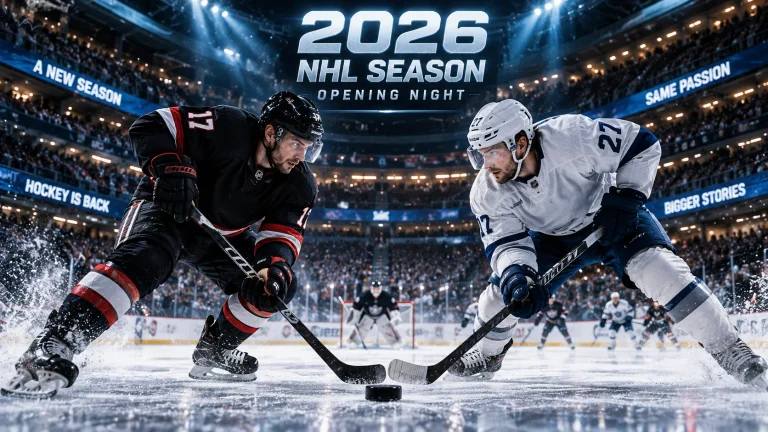
The 2026-27 NHL regular season begins on September 29 with an unusually compact opening-night slate that still offers plenty of variety. Five games will put established contenders, Original Six rivals, Canadian heavyweights and rebuilding teams on the ice immediately. Because the league is moving to an 84-game regular-season schedule, this opening week also arrives after a shorter preseason, which makes early execution, line chemistry and special-teams readiness more important than usual.
Opening night is never a perfect indicator of where a team will finish, but it does reveal how quickly clubs have absorbed systems, how coaches are deploying new combinations and which teams can handle high-intensity situations before everyone is fully settled. Rather than treating September 29 as a set of isolated results, the better way to watch the night is to focus on repeatable indicators: puck management, transition defense, power-play structure, goaltending sharpness and the ability to win difficult minutes.
Why the 2026-27 Opening Night Is Different
The NHL’s new 84-game schedule changes the rhythm of the season from the first week. Teams had a reduced preseason, with fewer exhibition games available to test combinations and systems before meaningful points are on the line. For clubs playing on September 29, that creates a compressed preparation window. Coaches have less time to separate evaluation from implementation, and veteran groups with established structure may have an early advantage over teams making major tactical or personnel changes.
That does not mean new-look teams are automatically at a disadvantage. Fresh systems can also create uncertainty for opponents because there is less current film to study. The more useful question is whether a team can execute its preferred style without needing several games to find timing. Watch entries into the offensive zone, exits under pressure and how quickly defensemen make decisions when the forecheck arrives.
Florida Panthers at Carolina Hurricanes
Florida and Carolina provide one of the strongest tests of structured hockey on opening night. Both organizations have spent recent seasons building around pressure, pace and territorial control, which makes the details away from the puck especially important.
The first key is Carolina’s ability to turn pressure into clean second and third opportunities rather than harmless point shots. Florida, meanwhile, is at its best when it can break pressure with controlled support and create offense before the opposition can reset. If the Panthers consistently exit with possession, Carolina’s forecheck can become a source of transition chances against it. If Carolina traps Florida below the hash marks, the game can tilt the other way.
Special teams should also matter because opening-night games often feature timing mistakes, stick infractions and defensive-zone penalties. Whichever club establishes its power-play entries earlier may gain an edge even if five-on-five play is relatively even.
Montreal Canadiens at Toronto Maple Leafs
Montreal-Toronto carries the emotional intensity of a rivalry before either team has fully settled into the season. That can produce fast starts, but it can also produce overaggressive pinches, unnecessary penalties and transition chances in both directions.
Toronto’s challenge is to turn offensive-zone possession into high-quality chances rather than simply controlling the puck along the perimeter. Montreal’s younger skill players can be dangerous when the game becomes open, so Toronto will want its defensemen and high forwards connected enough to prevent odd-man rushes.
For Montreal, the key is managing the neutral zone. The Canadiens do not need to dominate possession to be effective if they can force Toronto into difficult entries, recover loose pucks and counter quickly. Watch the first ten minutes closely: if Montreal survives Toronto’s home-opening energy and keeps the game structurally clean, the matchup becomes much more interesting.
New York Rangers at Boston Bruins
Rangers-Bruins is the type of game where goaltending and special teams can swing the result quickly. Both markets expect immediate competitiveness, and both teams typically place a premium on controlling the middle of the ice.
The most important matchup may be below the faceoff dots. Boston traditionally wants to make opponents work through contact and layers, while New York has the skill to punish teams that lose shape after a failed breakout or a bad line change. The Rangers should look to create speed through the neutral zone; Boston will try to turn that speed into board battles and predictable entries.
Early-season discipline is another factor. A single poorly timed penalty can hand a skilled opponent the chance to settle into a power-play rhythm before five-on-five chemistry has fully formed. Whichever team spends less time defending special teams may control the flow even if the shot totals remain close.
Vancouver Canucks at Edmonton Oilers
Vancouver at Edmonton is one of the most compelling offensive matchups of the night because both teams can create dangerous chances quickly when possession changes hands. Edmonton’s top-end skill makes every neutral-zone turnover dangerous, while Vancouver’s best path is to force the Oilers to defend longer possessions rather than trading rushes.
For Edmonton, puck support on exits will be important. Vancouver can pressure aggressively when it senses a vulnerable first pass, and careless reversals can become immediate scoring chances. For Vancouver, the challenge is controlling the middle of the ice without collapsing so deeply that Edmonton’s defensemen are allowed to walk into space.
This is also a matchup where the first goal can change the tactical picture. If Edmonton scores early, Vancouver may be forced to open the game sooner than it wants. If Vancouver establishes a lead, it can make Edmonton work through layers and potentially frustrate a team that prefers to attack with speed.
Chicago Blackhawks at Vegas Golden Knights
Chicago against Vegas offers a useful contrast between a team still developing its identity and a club accustomed to playing with structure and expectations. For Chicago, success is less about matching Vegas shift for shift in physicality and more about making clean decisions before pressure arrives.
Vegas can overwhelm young teams by extending offensive-zone time, rotating low-to-high and forcing defenders to make repeated reads. Chicago needs short shifts, reliable puck support and disciplined exits. If the Blackhawks repeatedly fail to clear the zone, the cumulative pressure can become more important than any single scoring chance.
At the other end, Chicago’s best opportunities may come when it attacks before Vegas can establish its preferred defensive structure. Quick counters, controlled entries and second-wave support can create enough uncertainty to generate quality looks. The key is avoiding a game where Chicago chases possession for long stretches.
Five Indicators Worth Tracking Across Every Game
Opening night results matter in the standings, but the underlying indicators are often more valuable for understanding what may carry into October.
- Controlled zone exits: Teams that consistently leave their own zone with possession reduce pressure and create cleaner transition opportunities.
- Net-front chance quality: Raw shot totals can be misleading. Chances from the slot, rebounds and screens reveal much more about offensive effectiveness.
- Penalty differential: Early-season timing is imperfect, so disciplined teams can gain a meaningful advantage by avoiding unnecessary special-teams minutes.
- Goaltender rebound control: Goalies may still be finding game rhythm. Clean rebound management can prevent one routine save from becoming a dangerous second chance.
- Line matching and deployment: Coaches reveal priorities immediately through matchup choices, defensive-zone starts and which lines are trusted late in close periods.
How to Read Opening-Night Predictions Responsibly
Prediction content is most useful when it explains the assumptions behind a pick rather than presenting certainty. For a matchup-by-matchup look at the September 29 slate, Digital World Pulse has published NHL predictions for September 29, 2026, with a focus on matchup dynamics, expected game flow and the variables that could change each result.
The best opening-night analysis should remain flexible because line combinations, goaltending assignments and late roster decisions can change quickly. Instead of treating a prediction as a fixed outcome, use it as a framework: identify where one team may hold an advantage, then watch whether that advantage actually appears once the puck drops.
Final Takeaway
September 29 gives NHL fans an unusually strong first look at the 2026-27 season. Florida-Carolina tests structure and pressure. Montreal-Toronto brings rivalry intensity. Rangers-Bruins should reward discipline and goaltending. Vancouver-Edmonton offers high-end transition skill, while Chicago-Vegas provides a clear test of execution against an experienced, structured opponent.
The biggest lesson, however, will not come from the final scores alone. With a shorter preseason and an expanded 84-game schedule, the teams that look organized immediately may separate themselves before the rest of the league finds its rhythm. Watch the details behind the results, and opening night can tell us far more than the standings will show after one game.
About the Author